SEO
Why every service needs its own page for SEO
How separate, well-structured service pages help both search engines and customers, and what each page should include.
By Nexbrave Solutions team. Published . 5 minute read.
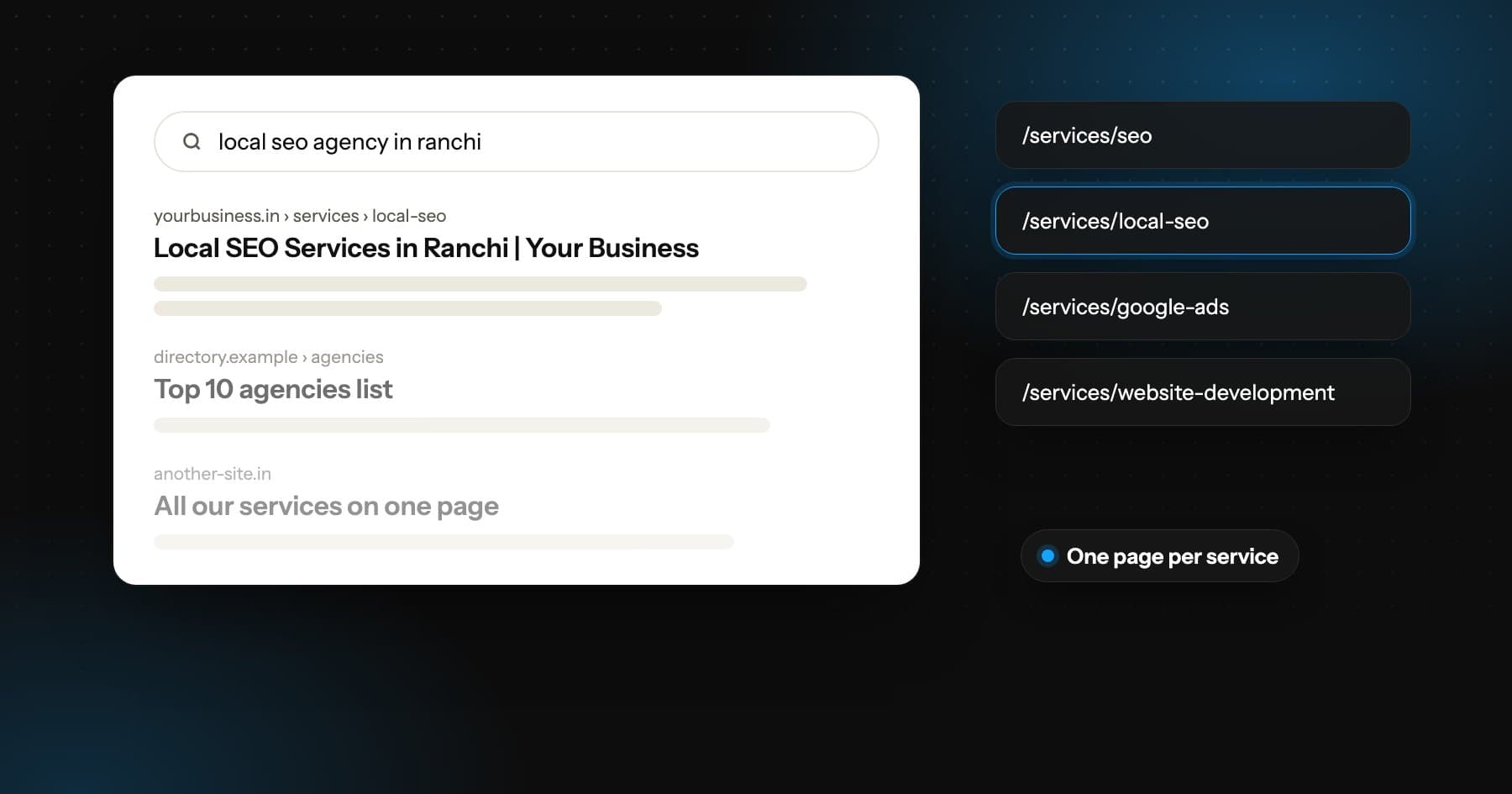
A common pattern on small business websites is a single 'Services' page listing everything the business does in a few lines each. It is tidy, but it is one of the main reasons those businesses struggle to rank.
One page, one search intent
Search engines try to match each search with the page that best answers it. Someone searching for 'root canal treatment' wants a page about root canals, not a list of twelve dental services. A dedicated page with useful detail is far more likely to rank and to convince the visitor.
What a strong service page includes
- A clear heading that says what the service is and, where relevant, where it is offered
- Who the service is for and the problems it solves
- What is included, step by step or as deliverables
- How the process works and what the customer needs to do
- Honest answers to common questions about cost, time and results
- Links to related services and a clear way to get in touch
Avoid thin and duplicate pages
Creating a page for every service only helps if each page is genuinely useful. Copying the same paragraph and swapping the service name, or creating near-identical pages for dozens of nearby towns, can do more harm than good. Search engines are good at spotting pages made only to catch searches.
Connect the pages
Link related services to each other where it makes sense for the reader. A page about Google Ads can naturally link to landing page design and conversion tracking. Internal links help visitors find what they need and help search engines understand how your services relate.
Measure what matters
Track enquiries per service page in Google Analytics, and watch Search Console for which searches each page appears for. Update pages that get impressions but few clicks with clearer titles and descriptions.